Click on this link to see some gifts made for the women we will be meeting in Zimbabwe.
Tuesday, January 28, 2014

Meet Team Member Shirley Ferrill
Shirley was born and raised in Wisconsin. After graduating from high school in 1954 she
joined the U.S. Navy. Boot camp was in
Bainbridge, MD; Class A Teleype School in San Diego and duty at Naval
Communications Station in San Francisco.
It was there she met a sailor, Joe Ferrill, and they were
married in 1957. He was transferred to
the Philippines and in order for Shirley to go there, she had to take a
discharge. They spent 18 months in the
Philippines, then to Norfolk, VA,
Alameda, CA and finally San Diego
They had three children along the way.
Joe retired from the Navy in 1969, and with three kids in school, they
stayed where they were. Joe died in 1992.
Shirley was a stay at home mom and Navy wife for a number of
years and then were to work for the local church and was the Administrative
Secretary for 12 years. From there she
went on the the United Methodist Urban Miniistry Agency for San Diego District
and spent 22 1/2 years with them. Her position Local Church Laison, but she
also served as case manage, volunteer coordinator and edited a newsletter.
She retired in 2002 and since then she stays busy with
involvements in Veterans organization, United Methodist Women and several
agencies where she served on the Board of Directors. Her interests are reading, movies, theater and politics and
traveling.
Her family of three children, four adult grandchildren and a
brother and family are all in San Diego and are an important part of her
life.
Sunday, January 12, 2014
Meet Team Member Loree Nicholas
Hi, my name is Loree Nicholas and I am one of the team
members for the 2014 Zimbabwe Ubuntu mission trip. I currently reside in Carol
Stream, IL. I am married with two
daughters ages 21 and 22. I have been in
private practice since 1988 as a general dentist in Glen Ellyn, IL. Prior to
dental school I received my certification as an expanded function dental
assistant in 1978 from University of IL
and have been in this field ever since. In the earlier years after my
graduation from Northwestern University Dental School I frequently went to the local
grammar schools to talk about oral health and proper technique to clean your
mouth and the impact that your mouth has on your overall health. I did that for approximately 10 years and it was
a true joy working with the children. My
own children after that took up much of my spare time.


My career has given me so many wonderful opportunities to
expand myself in ways that I never dreamed of.
Through extensive continuing education I have been able to travel to
many parts of the world and experience the cultures and love that so many
people have to offer. It has and will
continue to be a humbling experience to see how the other side of the world
lives.
I have been on two previous medical mission trips through
the United Methodist Volunteers in Mission working both times in Panama with
our devoted leader Jane Dunn. Both trips were amazing! When the invitation to join in on this group
effort to Zimbabwe was offered I did not hesitate to say a hearty "yes
please"! I am so looking forward to
meeting our team... working together to help in whatever ways that we can to
interact, help, share, laugh, cry and empower the women and children
that we will be working together with.
We have all been given many responsibilities to share and one of mine is
as the team medic ....I will surely strive to keep my gal pals healthy.
Below are a few photos of me working in Panama, taking a
hike at The Great Wall with The University of the Pacific Continuing Education
Group, and a photo amidst the lovely wooded orchards of Door County Wisconsin. Thanks everyone and wish us well.
Sunday, November 24, 2013
Meet Team Member Diana Smith from Iowa


My name is Diana Smith, one of the team members and blog master for the 2014 Zimbabwe Ubuntu mission experience. I live in Des Moines, Iowa. I am a lifelong United Methodist and am a member of the West Des Moines United Methodist Church. I enjoy traveling and learning about other cultures and countries, especially in a mission capacity. I have participated on several mission opportunities in the past. In July of 2012 I was an adult chaperone for our church's youth mission trip to Colorado for the Week of Hope mission experience where my team worked at a senior assisted living facility. In 2007 I spent four months in Guatemala as an individual Volunteer In Mission (VIM) through the United Methodist Church. I volunteered at a low-income daycare facility in the mornings and taught English to elementary aged children at the local Methodist church in the afternoons. In 2006 I was part of my church's mission work trip to Buffalo, New York.
Through my church I have also been involved in many programs and ministries. I currently sing on our Praise Team and help lead our contemporary worship service as well as co-leading our young adult small group. In the past I have taught children's Sunday School and English as a Second Language to adults. I was a co-chair of our missions committee, volunteered with vacation Bible school, sang in the choir, participated in small groups and local service projects.
I currently work for the State of Iowa at the economic development department as the trade show coordinator on the marketing and communications team. Before joining the IEDA, I worked for Children and Families of Iowa at the domestic violence shelter, where I coordinated donations for the families using our services as well as facilitated staff trainings and gave community presentations to raise awareness about domestic violence.
I am a recent breast cancer survivor, having been diagnosed in October of 2012 and I finished my last treatment in July of 2013. I am now cancer free and thankful that God isn't done with me yet. I am a strong, quiet individual who is very passionate about my faith and women's issues around the world. I enjoy history, traveling, practicing speaking Spanish, gardening, reading, music, spending time with family and friends, volunteering at church and helping people. I have never been to Africa and I am very much looking forward to this trip to learn about the women of Zimbabwe and their lack of healthcare and how we can help. I hope this is the first of many international team mission trips I will be involved with and someday I hope to be a team leader of one of these trips.
I have one cat, Chloe, who provides me with daily enjoyment. I have two wonderful parents and one younger brother plus many more family members and friends. Below are pictures of me from my time volunteering in Guatemala.


Meet our Team Leader

I am Jane Dunn and am
privileged to participate in the Ubuntu Zimbabwe Journey as leader. I am a life-long Methodist/United
Methodist. My husband Richard and I have
enjoyed 25 or more United Methodist Volunteer-in-Mission experiences to Panama,
Honduras, Guatemala, Cambodia, Senegal, Chile, Belize and to disaster areas
within the United States.
We have 3 adult
children. Two sons live in the Portland,
Oregon area with their families and a daughter resides with her family in Palm
Beach Gardens, Florida. We are the proud
grandparents of 5 grandchildren ranging
in age from 8 to 16.
I have a masters degree in
Nursing. My background includes
experience as a hospital staff nurse, clinic work, a hospital service line
manager and Assistant Professor at Lewis University School of Nursing’s
Baccalaureate Program. I am retired from
full-time work but for the past 5 years have served as Consultant to the United
Methodist General Board of Global Ministries as Manager of a Blog for Health
Volunteers at www.umvim4health.blogspot.com
.
While on an UMVIM experience
in Cambodia, a United Methodist Medical Missionary Nurse named Irene Mparutsa
served as one of our hosts. Irene showed
me the work she was doing regarding Community Health. Irene is originally from Zimbabwe, is now
retired and has returned home. She will
be volunteering to help host our group in February when we visit Zimbabwe.
Pictured below is a photo of Irene and me during the Cambodia visit in 2007.

Thursday, November 21, 2013
Zimbabwe Background Info

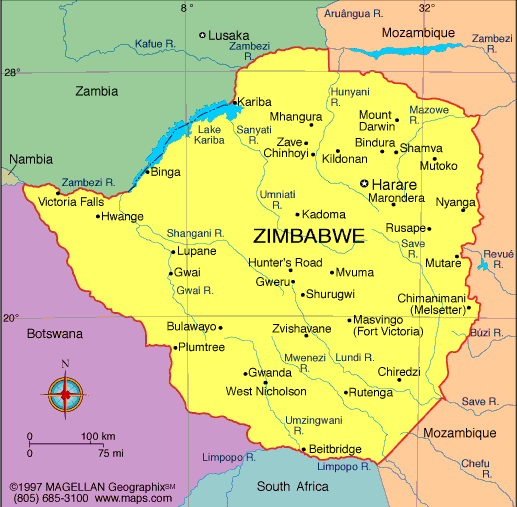
Zimbabwe /zɪmˈbɑːbweɪ/, officially the Republic of Zimbabwe,
is a landlocked country located in southern Africa, between the Zambezi and
Limpopo rivers. It is bordered by South Africa to the south, Botswana to the
southwest, Zambia to the northwest and Mozambique to the east. The capital is
Harare. Zimbabwe achieved de jure sovereignty from the United Kingdom in April
1980, following 14 years as an unrecognized state under the conservative white
minority government of Rhodesia, which unilaterally declared independence in
1965.
Zimbabwe has 16 official languages with English, Shona and
Ndebele being most common. The present territory was first demarcated by Cecil
Rhodes of the British South Africa Company, becoming a self-governing colony as
Southern Rhodesia in 1923. President Robert Mugabe is head of state and
commander-in-chief of the armed forces. Renowned as a champion for the
anti-colonial cause, Mugabe is also viewed as an authoritarian responsible for
Zimbabwe's problematic human rights record and substantial economic decline. He
has held power since internationally recognised independence in 1980: as head
of government since 1980 and head of state since 1987.

Most of the country is elevated in the central plateau (high
veld) stretching from the southwest to the northwest at altitudes between 1,200
and 1,600 m. The country's east is mountainous with Mount Nyangani as the
highest point at 2,592 m. About 20% of the country consists of the low veld
under 900m. Victoria Falls, one of the world's biggest and most spectacular
waterfalls, is located in the country's northwest as part of the Zambezi river.
The country has a tropical climate with a rainy season usually from late
October to March. The climate is moderated by the altitude. Zimbabwe is faced
with recurring droughts; and severe storms are rare.

The country is mostly savanna, although the moist and mountainous
east supports tropical evergreen and hardwood forests. Trees include teak and
mahogany, knobthorn, msasa and baobab. Among the numerous flowers and shrubs
are hibiscus, spider lily, leonotus, cassia, tree wisteria and dombeya. There
are around 350 species of mammals that can be found in Zimbabwe. There are also
many snakes and lizards, over 500 bird species, and 131 fish species.

Zimbabwe's total population is 12.97 million. According to the United Nations World
Health Organization, the life expectancy for men was 37 years and the life
expectancy for women was 34 years of age, the lowest in the world in 2006. An
association of doctors in Zimbabwe has made calls for President Mugabe to make
moves to assist the ailing health service.
The HIV infection rate in Zimbabwe was estimated to be 14% for people
aged 15–49 in 2009. UNESCO reported a decline in HIV prevalence among pregnant
women from 26% in 2002 to 21% in 2004.
Some 85% of Zimbabweans are Christian; 62% of the population
attends religious services regularly. The largest Christian churches are
Anglican, Roman Catholic, Seventh-day Adventist and Methodist. As in other
African countries, Christianity may be mixed with enduring traditional beliefs.
Besides Christianity, ancestral worship is the most practised non-Christian
religion, involving spiritual intercession; the Mbira Dza Vadzimu, which means
"Voice of the Ancestors", an instrument related to many lamellophones
ubiquitous throughout Africa, is central to many ceremonial proceedings. Mwari
simply means "God the Creator" (musika vanhu in Shona). Around 1% of
the population is Muslim.
Bantu-speaking ethnic groups make up 98% of the population.
The majority people, the Shona, comprise 70%. The Ndebele are the second most
populous with 20% of the population. The Ndebele descended from Zulu migrations
in the 19th century and the other tribes with which they intermarried. Up to
one million Ndebele may have left the country over the last five years, mainly
for South Africa. Other Bantu ethnic groups make up the third largest with 2 to
5%. These are Venda, Tonga, Shangaan, Kalanga, Sotho, Ndau and Nambya.
Minority ethnic groups include white Zimbabweans, who make
up less than 1% of the total population. White Zimbabweans are mostly of
British origin, but there are also Afrikaner, Greek, Portuguese, French and
Dutch communities. The white population dropped from a peak of around 278,000
or 4.3% of the population in 1975 to possibly 120,000 in 1999 and was estimated
to be no more than 50,000 in 2002, and possibly much less. Most emigration has
been to the United Kingdom (between 200,000 and 500,000 Britons are of
Rhodesian or Zimbabwean origin), South Africa, Botswana, Zambia, Canada,
Australia and New Zealand. Mixed-race citizens form 0.5% of the population and
various Asian ethnic groups, mostly of Indian and Chinese origin, are also 0.5%.
The information and photos in this post from http://en.wikipedia.org/wiki/Zimbabwe
UMCOR at Work in Zimbabwe
In the past decade, Zimbabwe has experienced political instability, economic collapse, food and fuel shortages, and cholera outbreaks. The United Nations Development Programme’s Human Development Index, which examines indicators such as health, education, income, income inequality, and life expectancy, ranks Zimbabwe 173 out of 187 nations studied.
The United Methodist Committee on Relief (UMCOR) opened a country office in Harare, the capital of Zimbabwe, in 2009 to develop programs in its four core sectors of expertise:
- Emergency response
- Livelihoods
- Social and community development, and
- Health.
- Food security
- Health
- Water, sanitation, and hygiene (WASH), and Education.
UMCOR works alongside local communities to identify needs and solutions, and collaborates with local and international partners, community groups, governments, and faith-based organizations, to respond to those needs in sectors such as livelihoods, health, shelter, and community development.
In Zimbabwe, UMCOR has focused its work to date in the provinces of Manicaland and Mashonaland East. UMCOR’s memorandum of understanding with the Government of Zimbabwe also covers communities in the provinces of Bulawayo, Midlands, and Masvingo, with scope for expansion.
Projects to Date
UMCOR is currently involved in the direct implementation of projects in the following sectors.Food Security, Agriculture, and Livelihoods
Since 1999, UMCOR has enabled thousands of smallholder families in the Democratic Republic of the Congo, Liberia, Sierra Leone, South Sudan, and, as of 2009, Zimbabwe to achieve increased food security and improved incomes through:- Access to basic seeds and tools
- Cultivation of thousands of new hectares of land
- Training in improved agricultural production techniques, and
- Improved conservation agriculture and watershed management techniques.
In 2011, UMCOR implemented the Local and Regional Procurement program, a pilot project of the United States Department of Agriculture, with a grant of US $1.7 million. The program supported 68,129 vulnerable persons in Chipinge District, Manicaland province, with 1,596 metric tons of food relief, including cereals, pulses, and oil in accordance with World Food Programme (WFP) standards.
In October 2012, UMCOR began working in Uzumba-Maramba-Pfungwe (UMP) District, Mashonaland East province, as a WFP cooperating partner. Through the Seasonal Targeted Assistance program, UMCOR is helping 27,774 vulnerable individuals there, through March 2013.
Given the need to transition from food aid to sustainable food security in Zimbabwe, UMCOR, with local and international resources, is building internal capacity in conservation agriculture and developing a range of pilot projects in this sector for implementation beginning in 2013.
UMCOR’s Sustainable Agriculture & Development program is providing support for capacity building and training to United Methodist missions and smallholder farmers in the surrounding communities in three districts in moringa tree cultivation, apiculture (bee farming), and Integrated Crop and Pest Management (ICPM).
Health
The United Methodist Church’s Imagine No Malaria initiative aims to raise US $75 million toward the eradication of malaria across Africa by 2015. UMCOR is a contributor to the Global Fund to Fight AIDS, Tuberculosis and Malaria and to the UN Foundation’s Nothing But Nets campaign.UMCOR has developed institutional capacity and experience through the implementation of malaria-fighting programs in Cote D’Ivoire, Sierra Leone, Democratic Republic of the Congo, Angola, and Liberia.In Zimbabwe, UMCOR has completed two malaria-prevention programs, covering 12 high-malaria-burden wards in Chimanimani District, Manicaland province. In coordination with the National Malaria Control Program (NMCP) and district partners, UMCOR has:
- Provided 45,437 long-lasting insecticide-treated bed nets to 19,199 households.
- Trained 449 stakeholders in malaria prevention and monitoring and evaluation. Stakeholders include village health workers; community care givers; local, traditional, and religious leaders; environmental health technicians; government health staff; school health masters; and ward councilors.
- Supplied Information, Education and Communication/Behavior-change Communication (IEC/BCC) support through drama and publicity materials in all program areas. This is complemented by a strong monitoring and evaluation component in coordination with NMCP and other nongovernmental organizations. UCMOR also works closely with church partners to increase the effectiveness of IEC/BCC components.
Water, Sanitation and Hygiene (WASH)
In March 2012, UMCOR completed the renovation of the water system at the Nyadire Mission of The United Methodist Church in Mutoko District, Mashonaland East province. It now provides clean water to more than 4,000 people. The work included the rehabilitation of boreholes and reservoirs to provide safe water to a hospital, a preschool, a secondary school, a teachers college, a nursing college, and an orphanage. The program also included Participatory Health and Hygiene Education training for 30 health workers and 10 teachers, and WASH awareness training for 250 students and staff.An assessment has since been commissioned to review the [clean water and hygiene] needs of the hospital and orphanage at the church’s Old Mutare Mission in Mutasa District, Manicaland province.
Social and Community Development/Education
UMCOR is currently developing a pilot project to support orphans and vulnerable children in Chimanimani District, Manicaland province. In coordination with local authorities, Child Protection Committees (CPC), and the Mutambara United Methodist Mission, UMCOR will provide support to 350 of the most vulnerable children in this area. Already, 300 primary and secondary school students have received support for school fees, uniforms, and learning materials, and another 50 children are receiving vocational training support. The program will also build the capacity of CPC members and support them through IEC/BCC activities to reduce stigma and improve the care of orphans and vulnerable children in the community.http://www.umcor.org/UMCOR/Programs/Country-Offices/Zimbabwe/Zimbabwe


Subscribe to:
Posts (Atom)